No football, no bueno

Back in the day I wrote my stories on a Smith-Corona typewriter my sister bought me and submitted them to a newspaper several cities away.

By John Murphy

July 20. This is the day. The day the CIF-State board of managers meets to determine the fate of high school sports for 2020-2021.

There is little suspense. The braintrust has no option but to postpone sporting activities until January due to COVID-19 and then hope for the best.

I was thinking about it and concluded this will likely interrupt my streak of covering high school football every fall. I have observed prep football for one newspaper or another every Autumn since 1974. That’s 46 years.

This includes my college days toiling for the now-closed San Mateo Times for the princely sum of $7.50 a game. That seems like a ridiculous amount and it is. But also figure a gallon of gas then was 53 cents per gallon, a quarter-pounder with cheese cost 60 cents and a Lucky 12-pack of beer went for $1.99 – not that we ever partook.

The first game I covered for The Times was a defunct school in my hometown of San Bruno called Crestmoor traveling to Daly City to meet Jefferson. Jefferson is John Madden’s alma mater.

It rained like Hell that September day and the game turned into a mud bowl. Both teams wore blue and gold and Crestmoor had three running backs that were all the same size, including twin brothers Jeff and John Maxoutopoulis. By halftime I couldn’t make out anyone’s number and quit taking stats.

My beat was the old North Peninsula League. It included Jefferson, Westmoor and Serramonte all of Daly City; South San Francisco and El Camino of South San Francisco; Terra Nova and Oceana of Pacifica; and Half Moon Bay.

The teams were all athletic and the competition and rivalries fierce. That was especially true in South San Francisco where rivals South City and El Camino met in the annual Bell Game. Things got a little out of hand one year, as an El Camino student got the bright idea to blow up the scoreboard with a pipe bomb during the national anthem. He succeeded, with hunks of metal scoreboard flying onto the field.  

By 1978 I graduated from San Francisco State and the $7.50 per game did not seem so grand – especially since I worked on a portable typewriter and had to submit my stories to a newspaper a few cities away.

So before the ’78 season me and another Times correspondent, Paul Salvoni, went to the newspaper management requesting higher pay. We had all our reasons outlined and presented our case and – presto! – got a raise to $8.50 a game. We were going to be rich!  

I never benefited, though. The sports editor down in Watsonville accidentally drove his car off a cliff and died and I was hired to replace him. So I packed up my belongings and moved south and have been writing prep stories for newspapers ever since.  
Cal League confidential

By John Murphy

Back in 1992 I got hired by the Victor Valley Daily Press to cover high school sports and the High Desert Mavericks.

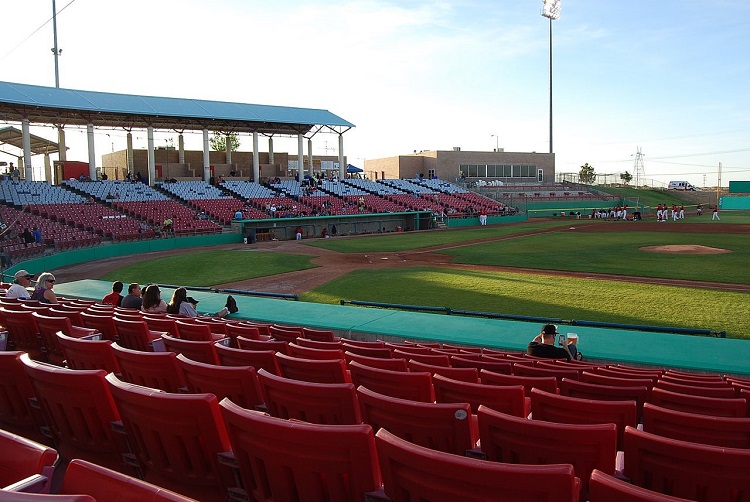
The Mavericks were a California League Class A team which began in 1991 and folded a few years ago when the league constricted. But in ‘92, fresh off winning the Cal League title under manager Bruce Bochy, the Mavericks were hot.  

There’s a lot I could write about the Mavericks and their ballpark and the people who worked for them. But today I’ll focus on the mixed bag of newspaper guys who covered the team or breezed through Adelanto following its Cal League foes.  

The late Howard Frost was a fixture in the Mavericks press box for many years. Nobody really knew who he worked for – the Pinon Hills Pine Cone or Hesperia Senior Shopper or the Barstow Birdcage Liner … who knows? But it was fun watching visiting scribes get all huffy and bent out of shape because Howard took up space in the booth and didn’t even do post-game interviews. He just hung out in the booth keeping score and regaling us with tales about his Marine days … or musing over between-inning music selections like “Whoomp, There It Is” by Tag Team. “Whoomp, there WHAT is?” Howard would say. I miss that ol’ guy sometimes.

When I first arrived in Victorville the guys who covered the Mavericks consistently were my colleague Brian Sullivan of the Daily Press, Brian Robin of the Antelope Valley Press and sometimes the late Jim Long of the San Bernardino Sun. But other characters like Landon Negri, Pete Marshall, Gabe Lacques, Maureen Delaney, Lance Pugmire and Danny Summers streamed through there as well.

The media and the ballplayers generally got along, but I did have future big leaguer Carl Everett yelling at me in the middle of the clubhouse after a game. Can’t recall what it was about. A few years later I drew the ire of Mavericks manager Joe Ferguson for breaking his 10-minute clubhouse cooling-off period. I knocked on his door five minutes after a dramatic win and he was inside smoking cigarettes with Moe Drabowsky, a former Baltimore Orioles great. “Has it been 10 minutes yet!” I can still hear Ferguson yelling at me. “Do you know what 10 minutes is?”

This anecdote is not from Mavericks Stadium, but there’s an infamous story out of Rancho Cucamonga about a back-up Daily Bulletin writer who paid only scant attention to the action. In fact, he was known for reading paperbacks while he covered games. On Fourth of July he got so bored he fell asleep around the fifth inning and didn’t awaken until the post-game fireworks started exploding! Must have been some post-game interview.

Food was important. This usually meant free hamburgers or hot dogs or burritos if you were lucky. Lake Elsinore had the best spread with their roast chicken, potato salad and green salad. But Lancaster out-did even the Storm for a mid-1990s Cal League all-star game.

Eager to impress the invading media, the JetHawks served thick rib-eye steaks. It was easily the best Cal League meal I ever had. The only problem was they gave us flimsy plastic utensils. About every 20-30 seconds you’d hear the loud SNAP of a knife or fork breaking, followed by much laughter. Ah, the memories.

Murphy Invitational

By John Murphy

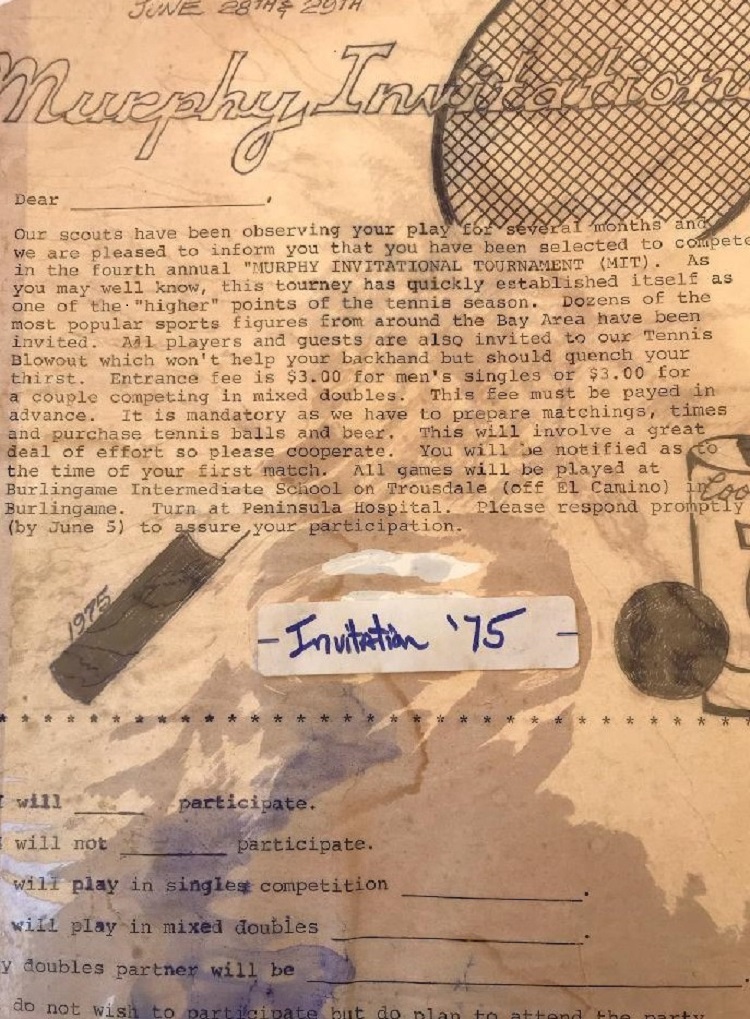
The invitation set the tone for the event:

“Our scouts have been observing your play for several months and we are pleased to inform you that you have been selected to compete in the fourth annual Murphy Invitational Tournament (MIT).”

Continued the invite, “All players and guests are also invited to our Tennis Blowout, which won’t help your backhand but should quench your thirst.”

The MIT was the brainchild of my brother, Jim Murphy, and was held in 1972, ’73, ’74 and ’75, then returned for a farewell performance in 1993. Wimbledon it was not, but nobody complained.  

I texted my brother in Burlingame and asked him his funniest memory of the event. He said, “Rolling kegs onto the court. What could they do? The after party at the Schaukowitch house was a blast. Mostly, the tennis was damned competitive. Lots of fairly athletic people with marginal tennis skill.”

There was competition in both singles and mixed doubles. Most of the players were my brother’s friends from either high school or Santa Clara University. Luminaries included Jim Wilhelm who later played outfield for the San Diego Padres, former Capuchino High basketball and baseball ace Matt Kriletich and Bill Chambers, who led Bellarmine College Prep to a slew of section soccer titles in the 1990s.

But it was former Crestmoor High shortstop Jim Beck who walked away with the top prize the first two years (if there was a prize). The entry fee was only $3, so Beck was not lifting any crystal vases into the air.  

By 1975 my brother had graduated from college and I took over the event.

I did not reserve the tourney site, Burlingame Intermediate School, for the competition. This required me to boot eight serious adult players off the premises before we could begin play.  

“How did you reserve the courts – who did you talk to?” an agitated man wearing all whites and clutching his Jack Kramer asked me.

“Superintendent Johnson,” I said, making up a name.

“Well, I don’t believe you, but we’ll leave,” he said.

Then we rolled a keg of Coors onto the court.

Matt Colvin and Jim Dwyer won in 1974 and ’75. Besides running the tourney in ’75, I was also dog-sitting for our neighbor Ed Fennelly. Ed was the commissioner of the West Catholic Athletic League, the most powerful high school athletic league in Northern California. .

The post-tourney blowout was at our family home and the dog was there. I guess things got a little crazy because the pooch slipped out the front door without anyone noticing. We lost Ed Fennelly’s dog!

It wasn’t until 2 a.m. after scouring the whole neighborhood that we found Ed’s poodle in a neighbor’s garage.

Finding the dog was a huge relief and a fitting end to the Murphy Invitational era. That is until 1993 when it made one triumphant return.

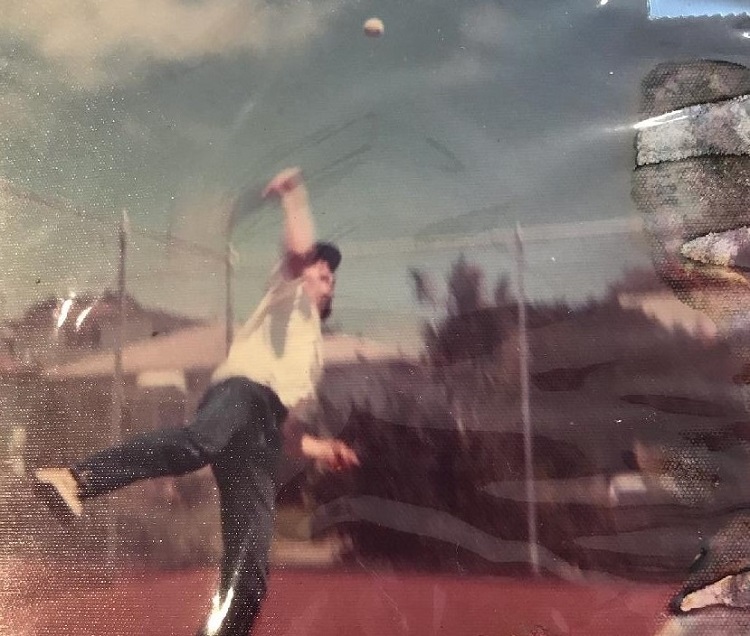
That’s me, rocking jeans, a white T-shirt and high-top cons, showing off the imperfect serving technique.

Trash-80 memories

By John Murphy

I was about one month into my new job at the Victor Valley Daily Press in 1992 when I erred.

Desiring to get to my car on the other side of a tall fence at Victor Valley High’s football field, I scaled the barrier. But first I needed to chuck my backpack over the fence to make it easier to climb. So I did and – OH CRAP! – I remembered my portable computer on loan from the paper was in the bag.

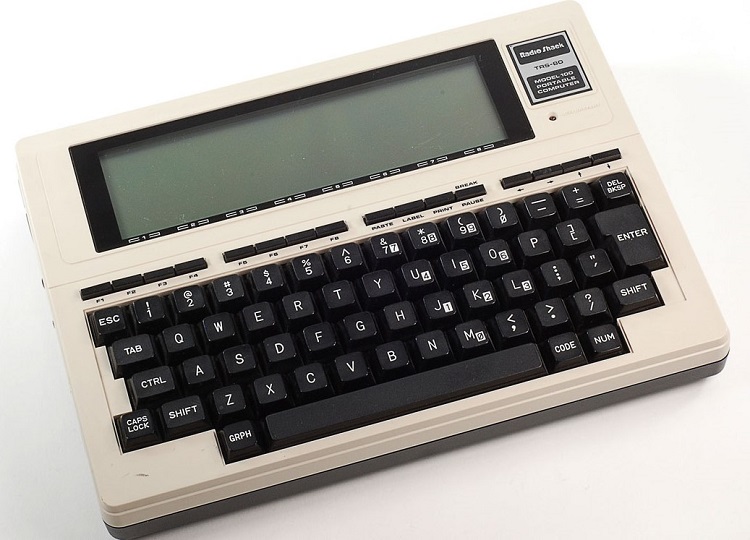
The TRS-80 Model 100 was the first handheld computer in history — a game-changer for journalists on the go from 1983 through the late 1990s. These things weren’t Dells, but they did cost about $800. That was about a paycheck for me.

I watched in horror as the backpack soared through the warm September sky and hit the concrete with a crack. Frantic, I pulled the Model 100 out of the bag and shook it. I could hear parts rolling around inside. Not good. But when I turned it on, it lit up! Thank you, Lord.   

I started using a TRS-80 (Trash 80s we called them) in Victorville and didn’t stop until the early 2000s at the San Bernardino Sun. My former boss at The Sun, Paul Oberjuerge, used one too. And when we needed our machines refurbished or wanted cords for them, we called the guru of the Model 100, the late Rick Hanson of Pleasant Hill, Ca.

Hanson sold the contraptions, fixed them, and – just as vital — sold the cords needed to connect the machines to telephones so you could send your stories.  

The Model 100 was not high tech. Working on deadline one night after a football game at Serrano High, I found myself in the middle of the campus, needing a place to write. But the Trash 80 did not light up like a modern laptop and the campus was dark. Deadline was approaching and I was beginning to panic.

That’s when I spied a soda machine next to a portable classroom and got the inspired idea to plop myself down next to it. There I sat for the next 20 minutes, happily composing my masterpiece by the light of the Coke machine. Then I transmitted it to the office using a pay phone and these dreadful things called couplers that I won’t even try to explain.

By the late 1990s, the Trash 80 had fallen out of favor in American newsrooms. I finally gave up the ghost in the early 2000s and gave about five of them to Goodwill.

But before I unloaded them, I pulled one out and gave it to my now daughter-in-law Felicia Lopez who was then a computer programming major at UC-Riverside. She eyed the antiquated machine, played with it a bit, and deemed it “cool.” I couldn’t agree more.

Good vibrations

By John Murphy

Concerts. I’ve seen a ton. And they’ve ranged from great to average to sub-par.

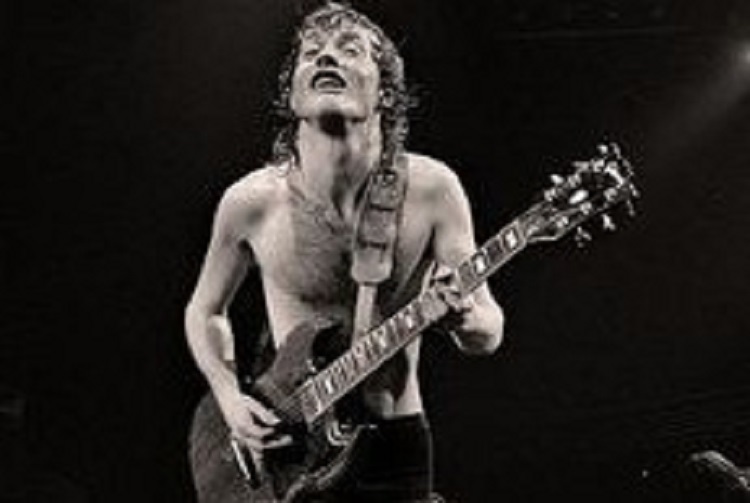
My top two are AC-DC in Mountain View and Bruce Springsteen in Oakland. But checking in at No. 3 is a surprise – Day on the Green No. 1 on May 24, 1975 at the Oakland Coliseum. Yes, I’m old.  

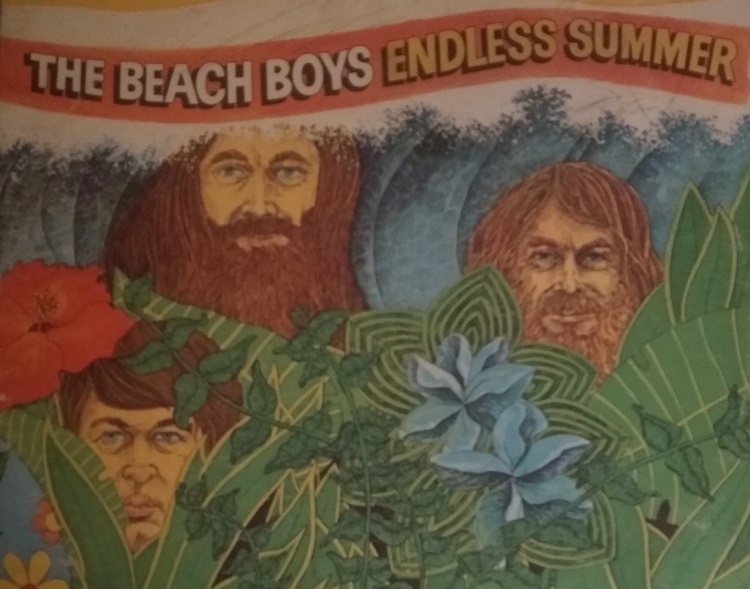
The bill consisted of Commander Cody and His Lost Planet Airmen, New Riders of the Purple Sage, Bob Seger, Chicago and the Beach Boys.

I was 19 years old then and working for the San Bruno Recreation Department. My co-worker, Steve “Obbie” O’Brien and I decided on a whim to attend this concert. We left San Bruno directly from a rec department event, knowing we’d be late.  

Obbie was a cross-country runner with a bushy hairdo and an infectious, fun-loving attitude. He made everything seem like a great idea. We climbed into his 1950s Buick, he popped in a Beatles’ eight-track and we were off.

We didn’t even have tickets. But true to form on this wondrous day, Obbie chatted up some Oakland cops outside the coliseum who were so charmed they gave us free tickets they’d confiscated from scalpers. Free tickets!

Entering the coliseum, spirits were high. We missed the first four acts but would still see the headliners, Chicago and the Beach Boys. Bring it!

I think Chicago played first, then the Beach Boys. It was magical. Then it got even better as both bands took the stage for a battle of hits.

The Beach Boys played “Little Deuce Coupe” or one of their great songs. Chicago countered with “Saturday in the Park” or some such hit.” The Beach Boys responded with maybe “Surfin’ Safari.” Chicago rolled out “25 or 6 to 4” or whatever. Amazing stuff. And the fans went wild.

By now we had joined a long conga line and were dancing around the Oakland As infield — laughing and singing in the warm sun with a slight beer buzz and feeling free.

I’ve been to dozens of concerts since then and didn’t have half the fun. Now we’re in a pandemic and we’re social distancing and I couldn’t try to duplicate this experience if I tried.

But every day I go for a long walk and I’m usually tuned to a classic rock station. And when I hear a Beach Boys or Chicago song it takes me back to May 24, 1975. Good times.       

Tomas Huerta

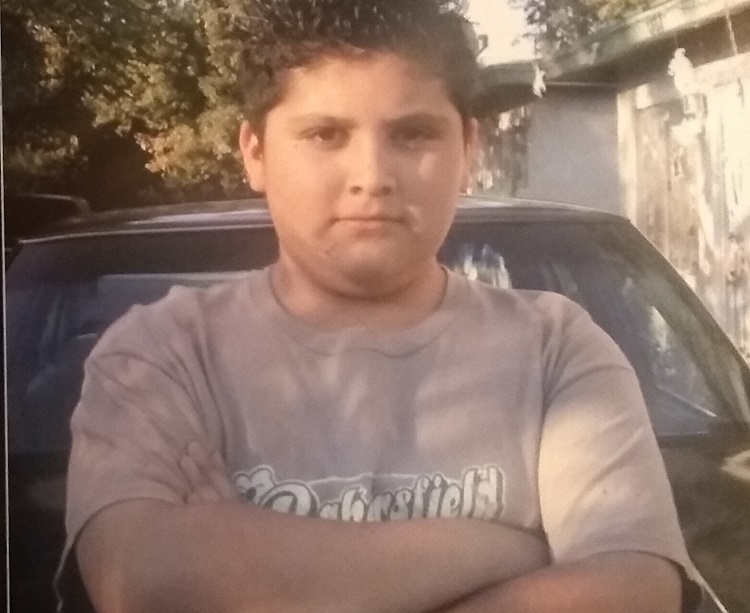
Tomas Huerta at about age 12, leaning back on my Oldsmobile and trying to look tough.

By John Murphy

Sometime around 1998 I was living in San Bernardino and had time on my hands, so I became a mentor.

An organization called Casa de San Bernardino introduced me to this chubby, 8-year-old boy with an angelic face named Tomas Huerta. He lived in the Muscoy area of the city with his grandmother.

Tomas’ parents were elsewhere and I don’t know all the details. But his grandmother lived in a little house and cared for him. She gave him stability, making sure he was dressed neatly and feeding him the Mexican meals she knew how to prepare.

I’d pick him up once a week, usually, on a Saturday or a Sunday, in the big Oldsmobile that once belonged to my father. We’d often stop at Stater Bros. and buy food. Occasionally we’d hit a Chinese restaurant on one of San Bernardino’s main drags. Tomas liked the orange chicken, but he could only eat half. So he’d wrap up the rest and bring it home to his grandmother for her to eat. He was a sweet kid.

We did simple things – watched ballgame games and movies on TV, played catch with a football, walked my dogs and hit the occasional movie or high school basketball game. I’m not a big believer in amusement parks and didn’t have much disposable income, so we didn’t do crap like that.

The late area businessman and sportswriter Harvey Cohen knew Tomas. His thrift store, Harvey Wallhanger’s, was near my house and we’d often drop by to say hello. “It must be Tomas’ birthday again,” Harvey quipped – teasing me about trying to get undeserved discounts. Harvey was nice to Tomas and sometimes gave him free stuff.

The mentor-mentee relationship typically lasts a year or two, but I stayed close to Tomas for about seven years. By then my life was more complicated, Tomas was older and it was time to part. Not all that was communicated as it should have been and it ended kind of abruptly, but so it goes. I have fond memories of him and I hope vice versa.

We’re Facebook friends now and I take a peek at his profile occasionally. He’s about 30 years old, has a job and lots of friends, plays the guitar, lifts weights, has a philosophical bent and I’m sure is a good person. I hope I played some small role. Anyway, I tried.

Box of memories

By John Murphy

The other day I received a letter from my credit union saying all the safe deposit boxes were closing. I had to move my contents.

So on Saturday I hit the bank and scanned the goodies. They included about 100 baseball cards of one Hall of Fame player I won’t mention by name and some other memorabilia, most of it sports related.

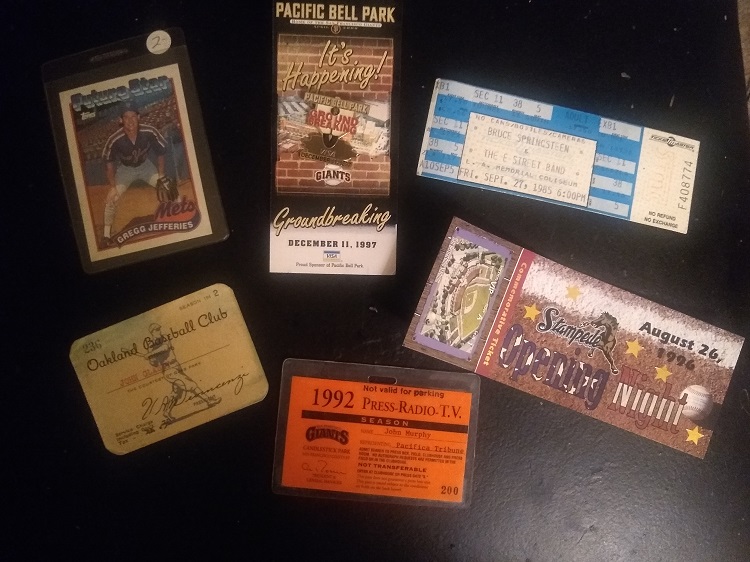
I took a photo of some of it – my orange, 1992 San Francisco Giants season media pass, a rookie trading card of ex-big league player Gregg Jefferies and a commemorative ticket for the first game played at San Bernardino’s San Manuel Stadium, among other items.

The Giants’ items are sentimental as I’m a third-generation San Franciscan and grew up in San Bruno, not that far from the wind-blown ballpark. My late father, an educator, would bundle up my older brother and I and we’d go out there on a Friday night. We’d scale an incline fans referred to as “Heart Attack Hill” and my dad plunked down the $2.50 apiece for reserved tickets. The memories of Willie Mays’ basket catches, the smell of the hot dogs and the sweet taste of Ghirardelli’s Flicks and Giants’ victories are still vivid.

San Manuel Stadium? In August of 1996 when the new San Bernardino ballpark opened it was known as “The Ranch” – a nod to the team’s name at the time, the San Bernardino Stampede.

The first game played there was on Aug. 26, 1996 against the Lake Elsinore Storm. I attended as a fan. As a bonus, major leaguer Mark Eichhorn of the Angels was on a rehab assignment with the Storm. I knew Eichhorn, a Watsonville High graduate, from having been the Watsonville Register-Pajaronian sports editor back in the 1980s. Ironically, Eichhorn pitched that night and took the loss.

The Gregg Jefferies trading card? The card was a hot item in the late 1980s when the can’t miss phenom made it to the big club with the New York Mets. He’s from my old high school in San Mateo and he was much-ballyhooed as a two-time minor league player of the year. Jefferies had a unique training regimen designed by his father Rich that included swinging a baseball bat in a swimming pool.

But the late 1980s Mets were a veteran group of players that included Keith Hernandez, Doc Gooden, Darryl Strawberry, Kevin McReynolds and David Cone. The media hype surrounding Jefferies and his relative immaturity (he was 19 when he first came up) alienated some of the veterans.

“He was 21 and he acted as if he had won three batting championships,” Hernandez once said.

Jefferies never became the next Pete Rose as some predicted he might, but he did hit .289 for his career spent with six big-league teams. He was a National League All-Star in 1993 and 1994 with the St. Louis Cardinals and hit for the cycle as a Philadelphia Phillie in 1995. He also, not incidentally, made it into my box full of memories.

Eamon Bowler

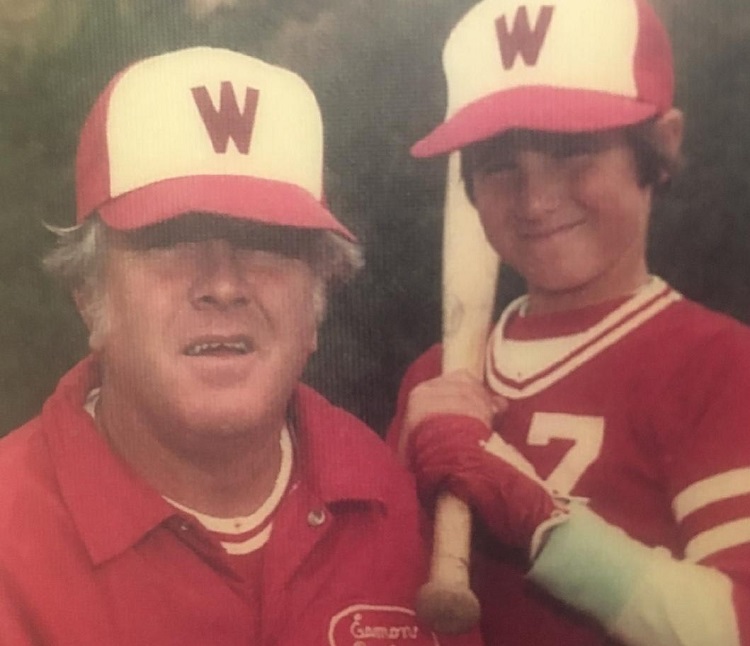
Eamon Bowler (with son Tim) helped a lot of San Bruno kids as coach of the powerhouse Wilkinson Wildcats, as well as many other teams during his 20-plus years volunteering.

By John Murphy

Back in college I got a job as a recreation leader and was assigned to John Muir School in San Bruno.

That’s where I met Eamon Bowler — “The Man, The Myth, The Legend — as his son Tim likes to say.

Tim was 8 years old and a budding sports star. His father Eamon offered to help coach our teams and he checked all my boxes:  1. Had a truck to haul the team around; 2. Had a son who shot a basketball like Rick Barry; and 3. Had a wife (Jane) who cooked like Giada De Laurentis.

Check, check and check. And, of course, he was a great coach, too.

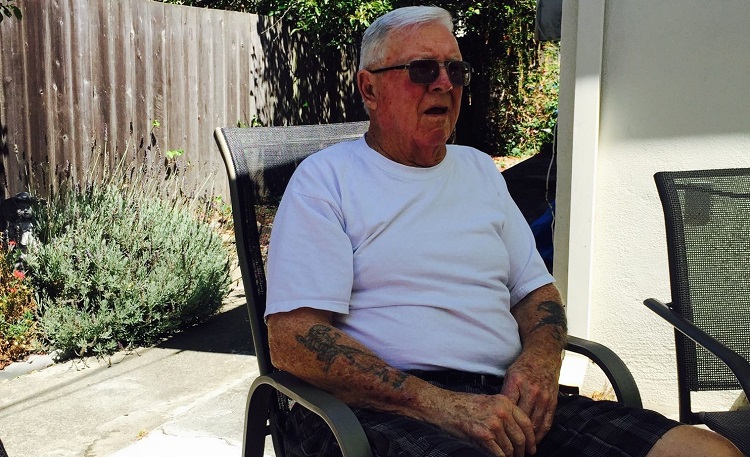
Eamon was about 6 feet tall and burly, with tattoos on both forearms from his stint in the Navy. He hailed from the Sunset District of San Francisco and Riordan High School and was irrevocably Irish – talkative, quick with a quip and unfiltered.

Eamon’s job as a groundskeeper in The City was perfect. He arrived at playground on time each day, sometimes with his daughters Susie and Shelley (both a few years older than Tim) in tow.  

We won a lot of games and Eamon had a special way with kids, teaching them the fundamentals and keeping things light with his good-natured teasing.  

Same with his Pee Wee League baseball team, the powerhouse Wilkinson Wildcats. Joey Serafini, Scott Delucchi, Mike Cochrane, Chris Rhoades, Steve Angeloni, Dave Cresta, Kevin Sinclair, Matt Coates – the team was loaded. And Eamon, or “Pops” as I called him, stood out as the only manager in the league to wear a full uniform.

Nothing lasts forever. I graduated from college in 1978 and was hired as the sports editor of the Watsonville Register-Pajaronian. I had never lived away from home and was nervous, but Pops had a plan.

He took me to the now-defunct TGIF’s in San Bruno for several cocktails. Then it was back to his house for gin fizzes. By half-way through the second blender, Pops was asleep on the couch. Me? I repaired to the master bedroom where I removed all my clothes and crawled underneath the sheets.

That’s where Jane Bowler found me when she got home from work – snoring, without a stitch of clothing and dead to the world. Ah, the memories.

Tim starred in basketball and baseball at Capuchino High and Canada College. He was inducted into the Canada College Sports Hall of Fame in 2017.  He invited me to the event at the San Mateo Elks Club and I was grateful to see his dad one last time.

A year later Eamon Bowler died at age 83. But before that he helped a ton of kids and was cherished by many, including me.

Eamon Bowler, tatted up, in his backyard where we all spent many enjoyable afternoons.

Can’t see, can’t hear

Rock ‘n’ roll ain’t noise pollution, but it won’t help your hearing.

By John Murphy

Health. I can’t complain about mine. I’m 64 and I’m still alive. Ambulatory even. I walk four miles a day. I have arthritis in my lower back that relegates me to the press box for football games, but it’s no big deal.  

If there were two things I could magically improve they’d be eyesight and hearing. Both are sub-par and that’s partially my fault.

The poor hearing I attribute to rock ‘n’ roll. Classic rock, heavy metal, outlaw country – I’ve listened to it all at ear-splitting volume over the years. And if you figure I owned three eight-track players before I even switched to cassettes, that’s a lot of years.

One month alone in the late 1980s is responsible for 15 percent of my hearing loss. I lived in Watsonville and my late friend Mark Ruso and I attended a pair of concerts in Mountain View two weeks apart — AC-DC and Def Leppard. They are not folk groups.

We took Cathy McCabe who worked at the Martinelli’s factory and her sister whose name I can’t recall. Ruso just called them “The McCabres.” Maybe you had to be there.    

Cathy was a little heavy rock gal and her car was littered with  cassette tapes. She blasted this obnoxious group, The Cult, all the way from Watsonville to Mountain View and back. It’s one of the reasons I say, “Pardon me?” 15 times a day now.

Eyesight. It’s an over-40 problem for many and not helped by reading in poor lighting or staring at computer screens for way too long. Unfortunately, I’ve done both.

Covering games is no sweat but watching them on TV is tough. When the Giants won all those World Series titles last decade, I had to squint and lean forward in my chair to see the pitch count and the inning. It sucked. Had no trouble making out the trophy presentations, though.

Walking

I take photos along the way — it keeps me in the moment.

By John Murphy

My exercise of choice these days is walking. Not sexy I know, but it works for me.  

My place to stroll after a jolt of coffee is the old part of Redlands. Roughly Cajon Street to Terracina Boulevard and back. It’s a bit under four miles.  

Lately as I walk, I listen to Bruce Springsteen’s podcasts. They cover the pandemic, Black Lives Matter and other current events. The Boss also reads names of people who have died from COVID-19 and what they enjoyed. Powerful stuff. In between he drops songs by Paul Robeson, Tupac Shakur, Woody Guthrie, etc. It’s worth a listen.

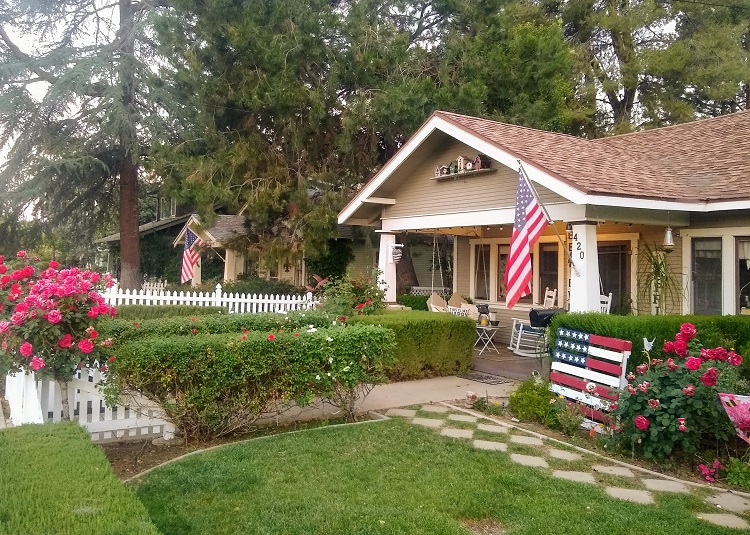
The houses and landmarks along Orange and Fern avenues fascinate. There’s a funky old two-story house on Orange reminiscent of “Animal House.” There’s another home, bathed in red and cream, that’s a 1904 Victorian cottage. I buy avocados from the owner.  

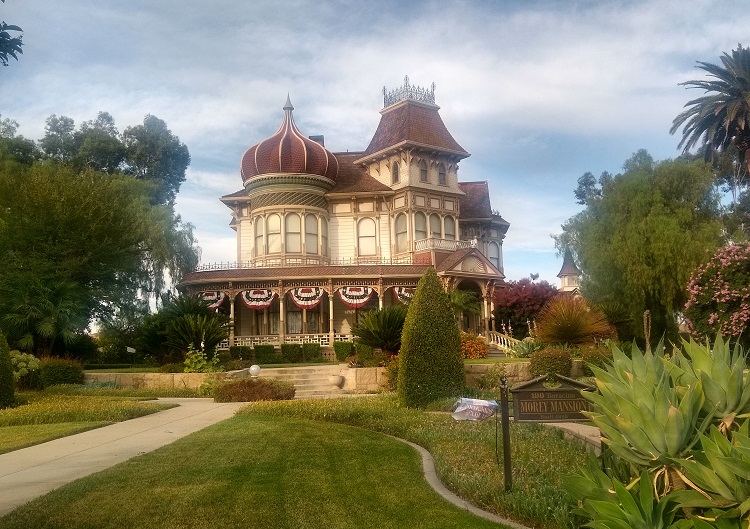
Along the way there’s the ancient Olive Avenue Market which needs no introduction. And the McKinley School with the sign saying, “We Miss You Bears.” The first half of the trek is capped by the magnificent Morey Mansion (see photo at bottom).  

Returning from Terracina, there’s a house on Laurel that has a water fountain. Thoughtful. Over on Fern is a small orange grove. There, fruit magically leaps right into my hands. Amazing!

The visuals stun all along Fern — a huge Victorian “cottage” at Beverly Ranch that looks more like a mansion; dozens of ancient homes adorned with American flags or congrats for the graduates; and grander, two-story palaces with views of the mountains.

The walking, the caffeine, and the music – it transports me to an alternate universe. Cares melt away. Problems vanish. I recommend it.

The Morey Mansion — a site to behold in this postcard of a town.