No mas

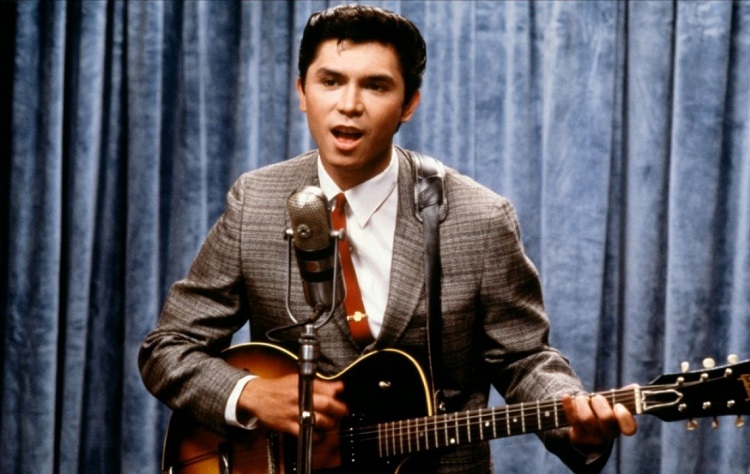
Lou Diamond Phillips played the late Mexican-American rocker Ritchie Valens admirably.

By John Murphy

Being the type of insomniac who awakens in the middle of the night and then often doesn’t go back to sleep has its disadvantages.  

This is especially true when a neighbor is hosting a free concert for the neighborhood from inside his giant pick-up truck or from the back of a Winnebago parked in a backyard.

The former happens occasionally at the house across the street. The place is owned by an old man who has maybe a grandson who owns this humongous pick-up truck. Occasionally the grandson will drive home from godknowswhere at 3 a.m. and listen to deafening music inside the cab of his truck. The tunes reverberate around the corner where we live. He actually has decent musical taste — Lynyrd Skynyrd, The Allman Brothers, ZZ Top. Good stuff, it’s just the timing is off.   

Last night the offender was the hombre in the Winnebago. He is a relative of a neighbor who lives behind us. There is an empty lot between the properties and this is where he hangs out in his huge vehicle, drinking cervezas and playing loud Mexican music.

Did you see the 1987 movie “La Bamba” about the late Mexican-American rock ‘n’ roll star Ritchie Valens? It’s a gem and received dandy reviews from Siskel and Ebert, I understand. At one point in the movie Ritchie’s reprobate brother Bob takes him to Tijuana to a whore house where loud Mexican music plays all night. This is what our backyard sounds like right now.

Well, I’m not totally unsympathetic. Back in the 1980s when I lived in Watsonville such music was common. I had a Slavonian friend, Mark Ruso, who stood 6-foot-3 and weighed about 250 pounds. We’d ride beach cruisers from my house on Bridge Street down to the little Mexican bars on the south end of Main Street. Lively Mexican music poured out of the speakers of those cantinas and the field workers celebrating payday had a grand time. They’d drink Budweisers and tequila and occasionally buy a shot for the big gringo visitors (us). It was all good.

But these impromptu concertos in the middle of the night here in Highland? No es Bueno. It’s 1 a.m. now and I have to be at work in seven hours helping ready a public school for distance learning. So I need less musica and mas silencio. Por favor! Gracias, mi amigos.   
Grooming counts

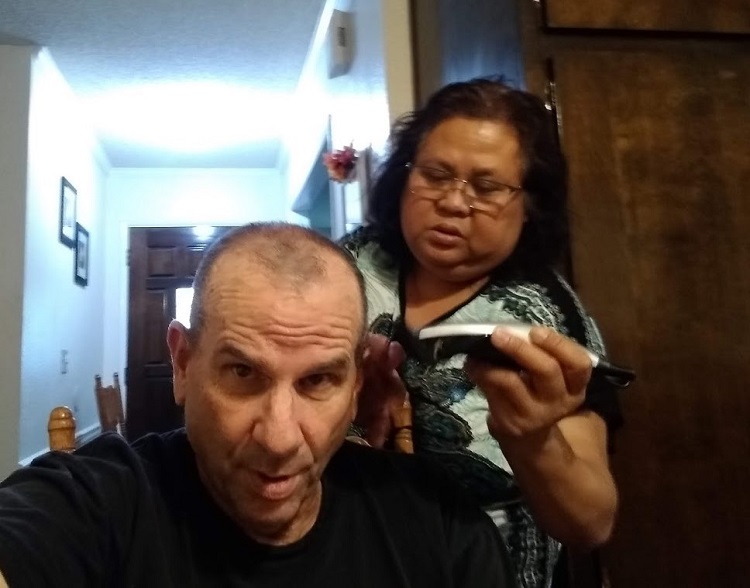
Needing a haircut this week I called upon the left-hander, the CalTrans Girl.

By John Murphy

School for me starts today. Fontana students don’t begin distance learning until Aug. 24, but I’m on campus at 8 a.m. sharp. I need to look good … or at least my best.   

So I asked the CalTrans Girl to give me a haircut. Make me beautiful. Or better, anyway.  

To do so would take the finest equipment. So CT Girl pulled out a 10-year-old Remington electric razor, last used on her deceased dog, Bert.  

“Is your hair wet,” CT Girl said as I plopped down on a kitchen chair.

“Is it supposed to be wet?” I asked.

“No, I don’t want it sticky,” she said.  

I took notes and was snapping photos with my Smart phone while she toiled, much to her dismay.  

Brrrrr, brrrrr, brrrrr the razor hummed. Six weeks of growth cascaded to the floor.   

“What are your qualifications?” I asked.

“Nothing,” CT Girl said. “This is an experiment.”

Momentarily taken aback, I rebounded quickly.

“What gives you such confidence?” I said.   

 “Because you will not break up with me even if I do a bad job,” she said.  

Brrrrr, brrrrr, brrrrr. My better half went about her business. Between our crack air conditioner and my falling locks, my dome was feeling very cool indeed.

“How will I look when this is done?” I offered.

“You look old without a haircut,” she said.

“Like I’m 41?” I said.

“M-hmm,” she responded, trying her best to ignore me.

I don’t have that much hair to begin with and the pile on the ground was deepening.

“How am I looking?,” I said, bracing for another barb.   

“Bald, what else,” she said.

I asked a succession of even stupider questions and received equally succinct and humbling answers. I won’t include all the exchanges because I know my readers don’t have unlimited time.

Finally, I said, “What kind of blog do you think this will make? Will it be interesting?”  

The CalTrans Girl paused. Then she laughed.

“I don’t know,” she said. “Nobody will read it.”

Ouch. She’s blunt, but accurate. Pretty handy with a razor, too.  

Thanks to the CalTrans Girl I headed to school this morning looking my best.

Return to the Historic District

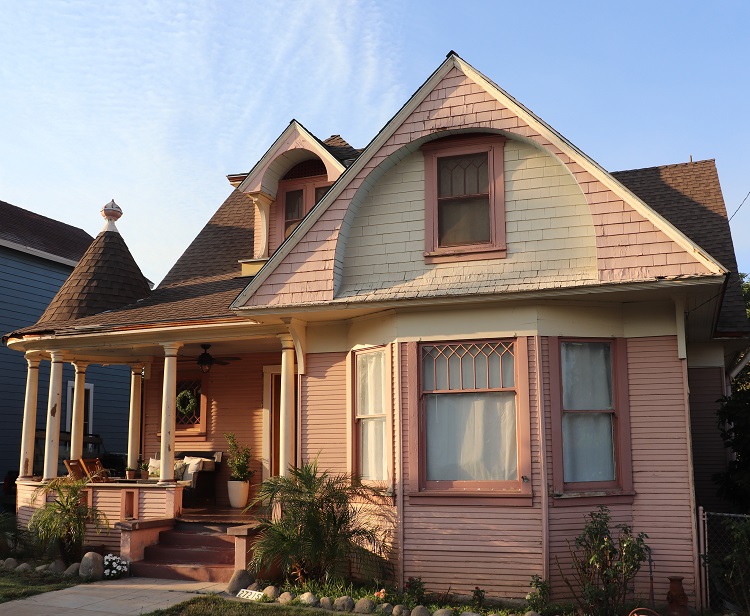
This pink Queen Anne-style cottage is the highlight of East Main Street.

By John Murphy

Monday was unusual in Highland as a cloud of brownish-orange smoke from the Apple Fire in Cherry Valley appeared. It drifted over the mountains in East Highland.

I crossed Base Line Street and photographed the plume from the middle of the Smart & Final parking lot. Then I headed for my favorite part of Highland, the Historic District.

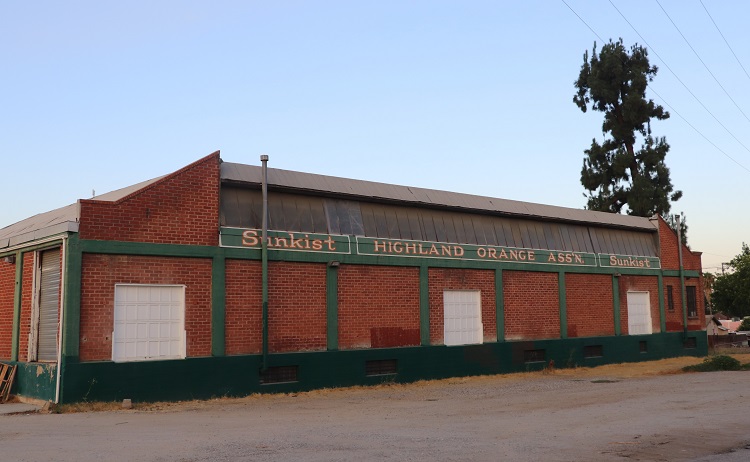
I entered from Church Street and hiked along pock-marked Pacific Street toward the old Sunkist building. It’s the last of the many packing-shed buildings that dotted the area. I took a few photos of it and one of a guy running with his dog, just for the heck of it.

The historic district has a mix of impressive homes and modest cottages. Back in the old days the wealthy citrus growers lived in the mansions and the citrus workers in the cottages. Funny how that works.

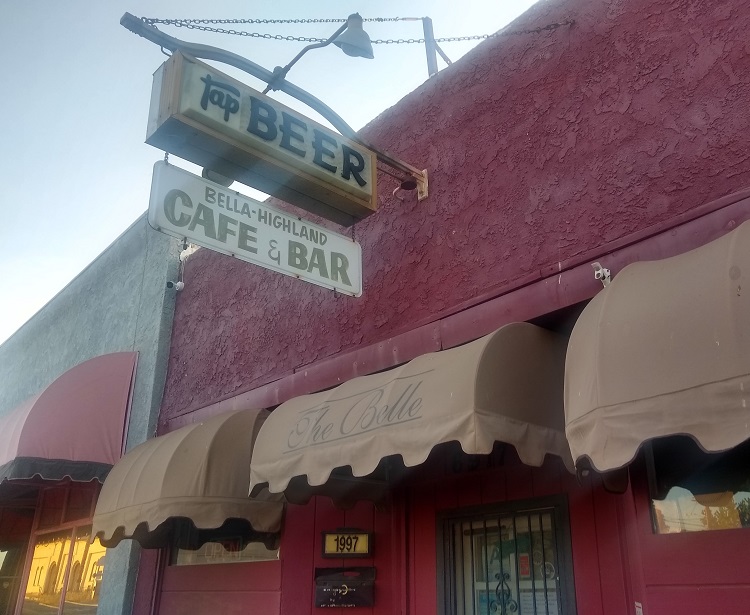
I then took a left on Palm and found the Bella-Highland Cafe & Bar, better known to locals as “The Belle.” The place has always fascinated.

The sign says Bella-Highland Cafe and Bar, but locals call it The Belle.

The Belle is closed now due to COVID-19, but it’s normally open and the last I knew was run by a vivacious woman named Martha. Peer inside and you’ll see a U-shaped bar where locals normally gather.

The Belle has a Facebook page and I perused it. It includes an entry from one Mick Beeson of Yountville. Mick grew up nearby at 27164 Pacific Avenue. He recalled his youth, scurrying around The Belle’s rooftop with his little playmates — much to the chagrin of its grumpy owner, Fuzzy Lawson.

Beeson later became a janitor at The Belle which was then owned by a chap named Steve. Well, ol’ Mick buys and customizes a 1955 Pontiac Chieftain, drives it for three months and then rolls it on the way back from a party in Redlands. He was driving 100 mph, took out 600 feet of fence and emerged with only a scratch!

So Mick hitch-hikes to The Belle where Steve is working. The proprietor wisely urges Mick to call the cops, then pours coffee down him for two hours until the gendarmes finally arrive.  

Said Mick, “I make the mistake of admitting I had ‘one’ beer before I assaulted the highway fence. Triple-A cancels my insurance, but at least I am not charged with a DUI. Will always appreciate Steve’s fatherly support that night. I was 24 but still had a lot of growing up to do.”

Leaving the Belle, I took a left on Main Street and saw the Gleason, an old boarding house established in 1890. It’s an apartment building now. Then I spied a long row of small cottages where, as I said, citrus workers of yore lived.

The old Sunkist/Highland Orange Growers Association building doesn’t process citrus anymore, but still stands.

After that I looped around to East Main Street which also features an array of homes. My favorite is a pink Queen Anne-style cottage toward the end of the street.

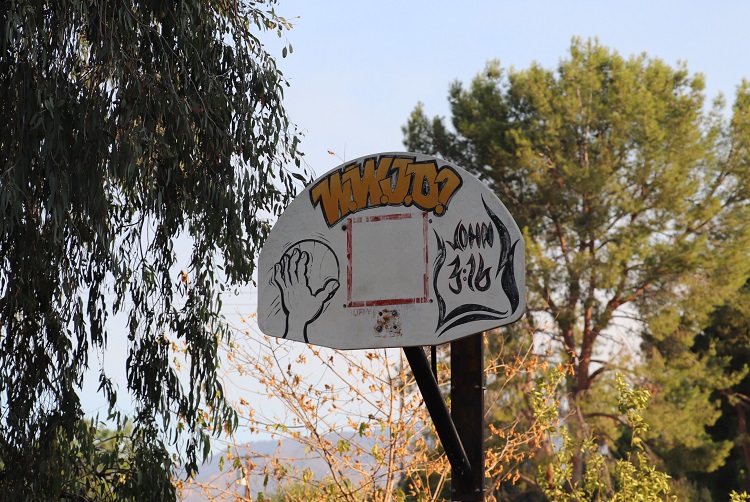
Eventually I wound up behind the shuttered Messiah Lutheran Church, one of four churches in the district. I found an opening in the fence behind the church and strode right across its campus. Then, glancing to my left, I saw a battered metal basketball backboard with its hoop missing. Decorating it was the Bible verse John 3:16, along with WWJD (What Would Jesus Do?) and a caricature of a hand shooting a ball.

I loved this scene and snapped more photos while I heard a Chris Stapleton song pouring through by earbuds:

“Angels come down from the heavens

Just to help us on our way

Come to teach us, then they leave us

And then find some other soul to save.”

Whoa, what did all this mean — this shuttered church, its basket with Bible verse and a soulful song of redemption? Nothing, I decided. Just a coincidence. Plus, my pen was running out of ink, so I left the Historic District and headed home.

This backboard at the shuttered Messiah Lutheran Church is well-adorned.

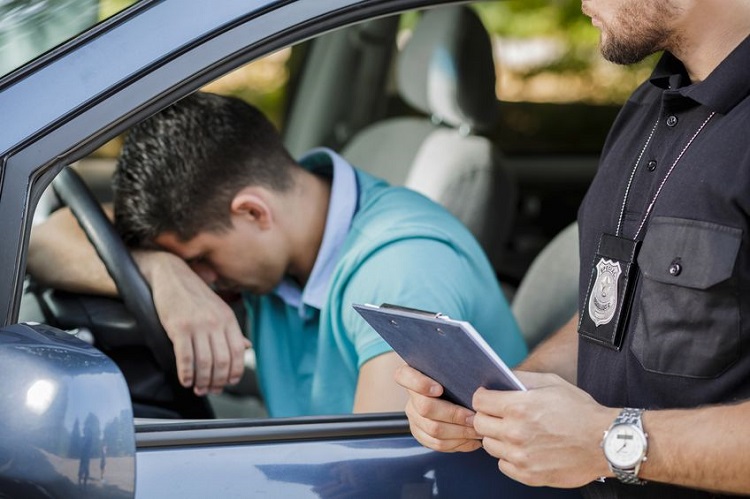
‘License and registration, please’

The last thing you want to see are those bright lights in your rear-view mirror.

By John Murphy

The year 1995 was eventful. Forrest Gump won the Academy Award for best picture, the San Francisco 49ers became the first team to win five Super Bowls and OJ Simpson was found not guilty of double murder for the deaths of former wife Nicole Brown Simpson and Ronald Goldman.  

Not faring so well in the court room that year was me. I was working for the Victor Valley Daily Press and, while embarking on a brief vacation to the Bay Area, was pulled over for traveling 30 mph over the speed limit (allegedly) in Lancaster.

“License and registration, please,” the California Highway Patrolman said from behind his aviator sunglasses. After examining the documents, he said, “I clocked you at 85 mph as you passed that Suburban. We don’t let people to drive that fast down here.”

“Down here?” Obviously, I was the victim of an anti-Northern California bias. Anyway, I soon found myself in a courtroom in the sweltering desert city of Lancaster. Although not exonerated, I had my fine halved by a merciful judge, then described my experience in a light-hearted Daily Press column.

My effort found its way to my former co-worker at the Watsonville Register-Pajaronian, Bill Akers. Akers, during the 1980s, was a cigarette-smoking editor (he lit up in the newsroom) who wrote a popular Saturday column. He also tackled crossword puzzles at his desk during lunch and amused us with his knowledge of obscure words — some of which we appropriated.

Akers, after reading my column, mailed me this letter and it’s a gem. Enjoy:

Dear John,  

It was heartwarming to learn that some of the culture you were exposed to in the Pajaronian newsroom has stayed with you. Although you are long removed from the Pajaro Valley in time and distance, you are still able to write a column using such words as bemusement, incarcerated, incongruous, reprobate and ne’er-do-well.

Lane Wallace sent me a copy of your column as proof that our efforts to civilize the sports department back then were not totally in vain.

Further proof that you have the makings of a gentleman was that you appeared in court “nattily attired,” although you failed to mention a necktie. You did wear a necktie, didn’t you?

I would suggest you look to OJ Simpson as an example of what a tailored suit, clean shirt and tasteful necktie can do for one’s image. However, when I suggest him as a role model I am speaking only sartorially; I do not necessarily endorse his method of solving domestic disputes.

It was a little disturbing to note that you still have some of the scofflaw in you. This was evident in your pique at having been ticketed for doing 85 in a 55 mph zone. Seventy-five, perhaps, but 85 was excessive. The constable did the only thing he could do.

And before you denigrate the costume of the lad in front of you in the courtroom, just think what you might have become had you not been surrounded by such splendid co-workers and friends in Watsonville.

A final admonition: Next time you get busted and are hauled into court, show some respect for the judge – a little groveling wouldn’t hurt; wear a necktie and use some big words. I have included a few such words in this letter in case you ever need them.

Your erstwhile co-journalist,

Bill Akers

Post-script: Bill Akers died in 2009 at 88. He retired from the newspaper business in 1983. After that he volunteered and, according to his obituary, drew with pastels and wrote poetry which, he said, “escaped being doggerel by the thinnest of margins.”

I looked up “doggerel” and it means “crude or irregularly worded verse.” It’s now a part of my vocabulary.

La Jolla dreamin’

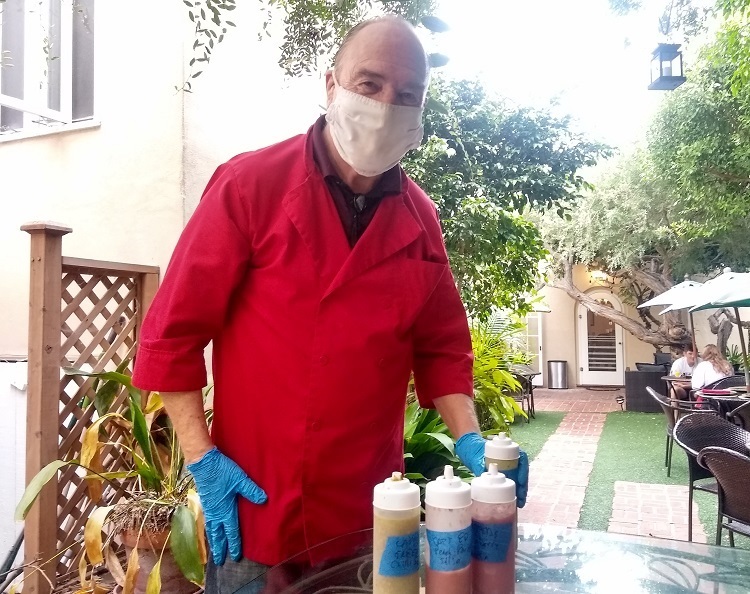
Ed McIntyre served up scrumptious meals and interesting tidbits about his historic B&B.

By John Murphy

Much as I just finished off the last crumbs of a slice of boysenberry pie from the Julian Pie Company, I will also describe the last vestiges of my recent La Jolla vacation.

The three-day stay with the CalTrans Girl at The Bed and Breakfast Inn at La Jolla was as pleasant as the weather was mild.  

Our B&B is at the old George Kautz House which was built in 1913. It sits next to the La Jolla Women’s Club (1914) and across the street from the La Jolla Recreation Center (1915). The women’s club and rec center were commissioned by the late Ellen Browning Scripps, a journalist and philanthropist who moved to La Jolla in 1896 and spent the final 35 years of her life there.  

Scripps, according to our host and B&B owner “Captain Ed” McIntyre, used to hang out at the Kautz House. So did famous architect Frank Lloyd Wright, Wright contemporary Irving Gill and Kate Sessions, a botanist, horticulturist and landscape architect who is known as the “Mother of Balboa Park.”

Captain Ed’s B&B is listed as a historic destination. Among those who have also slept there was the iconic John Philip Souza. Souza was an American composer and conductor known for his military marches who wrote “The Stars and Stripes Forever,” and “Semper Fidelis” and “The Washington Post,” among others.

Well, I banged out a few blogs while at the B&B but did not design any buildings nor compose any military marches. But we did enjoy the property’s peaceful gardens and Captain Ed’s tasty morning breakfasts.

Captain Ed is intriguing. Originally from San Jose, he was an elementary school teacher in Apple Valley before becoming a marriage and family counselor, a bed and breakfast owner, a sailor and a fine chef. Ed’s wife of 36 years, Laurel, is also a marriage and family counselor.

Every day we spent in La Jolla, our host prepared a breakfast of yogurt and fruit, quiche, asparagus, deviled eggs, cheesecake and coffee.

“Green eggs and ham?” Ed likes to say as he offers up a platter of deviled eggs. “Sam I am.”

It has been difficult weaning myself away from such a lifestyle and returning to the blast-furnace temperatures of the Inland Empire. But I do have most of a Julian pie purchased on the way out of town and wistful memories of the vacation that was to tide me over.

Religious experience

Unlike the rest of La Jolla Village, a tour of Mary Star of the Sea Catholic Church is free.

By John Murphy

Tuesday on our mini-vacation I ventured into La Jolla Village to check out the scene.

In my previous blog I described La Jolla as an “upscale Santa Cruz” and that’s not really true. Upon further review it’s fare more expensive and considerably less funky than the Surf City to the north.  

During my stroll around the village I managed to avoid the $9 waffle cone at a joint called “Oh Goodies” and a $41 leather lid at “Hats Unlimited” and found something decidedly less expensive … a church!  

Right there on the corner of Herschel and Kline is Mary Star of the Sea Catholic Church. The landmark was built in 1906 in a Spanish revivalist style and it was wide open, which stunned me. So I ventured in.  

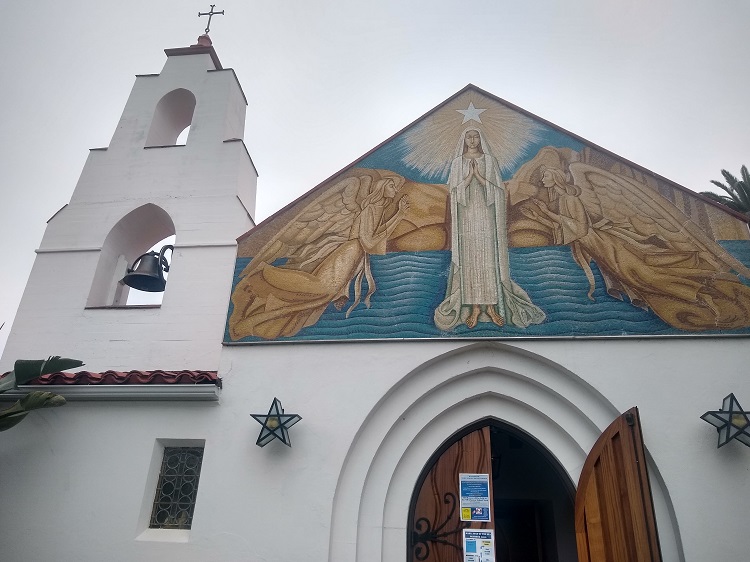
Mary Star from the outside resembles a small mission with two stars adorning the front, a mission bell that really rings and a mural of the Virgin Mary, flanked by two angels. ‘

I walked in like I owned the place. The interior is egg-shell white with light brown pews and ancient wood beams across the ceiling. My first impression was favorable.     

I’m Catholic so all of this was familiar, but infinitely cooler.  There were ornate confessional boxes on either side of the entrance, beautiful stained-glass windows and fancy light fixtures. It was all incredibly tasteful.

Progressing to the front of the church I also saw votive candles to light for the prayerful, a white marble altar and a display in the corner honoring the Immaculate Conception.

I wandered around, respectfully taking a photo here and there. I reached another section of the church with a small tabernacle. By this point an elderly Latino man had wandered in and was deep in prayer. I tried not to disturb him. But it was also hard not to notice a stained-glass window of St. Patrick holding a clover in his hand with snakes cowering at his feet. As an Irish-American, I appreciated that.  

There is also a grade school in the vicinity. The Stella Maris Academy for grades K through 8 is adjacent to the church. I attended a Catholic grade school similar to this, so again I was in familiar territory.

Every Catholic grade school worth its salt, in my opinion, must have a blacktop with at least one basketball hoop. I found just that catty-corner from the church. But I didn’t have a basketball and folding chairs covered the court, so there was no shoot-around on this day.  

Finally, it was time to depart. But before I did, I saw a hand-written sign near the school auditorium that said, “We Are So Excited to Be Welcoming You Back to School. Open Safe, Open Strong, Aug. 19, 2020.

I’m sure that’s a sentiment, in these pandemic-marred days, we can all agree with.  

Aquatic wonderland

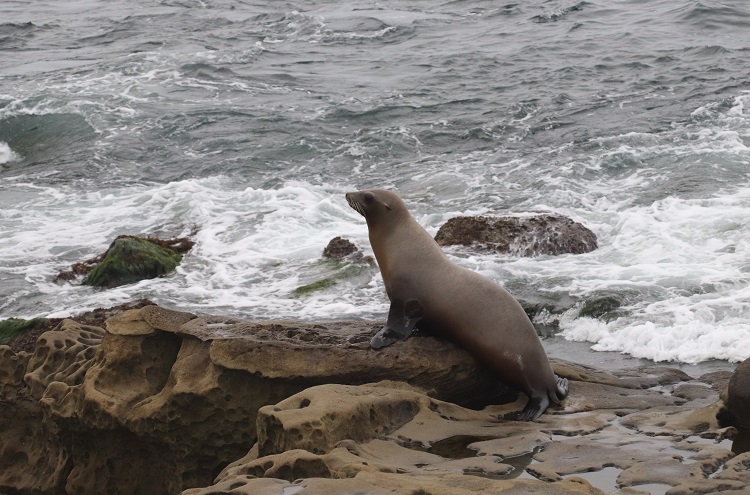
At picturesque La Jolla Cove, sea lions lounge and seagulls mill about. I recommend it.

By John Murphy

It’s been about four months since this coronavirus stay-at-home business started and we haven’t been anywhere – except for two junkets to La Jolla.

I love Santa Cruz in Northern California and that’s a go-to place for me, but with COVID-19 lurking, La Jolla is a worthy substitute.

The CalTrans Girl booked us again into the Bed and Breakfast Inn at La Jolla. Our “cottage” sometimes goes for $500 a night, but with tourism waning we nabbed it for $149 a night. Those are my kind of savings.

Monday I arose early in this coastal paradise. I headed for the beach, 50 yards away. It was the first workday since the weekend, so debris from the weekend crowds was visible. A teal plastic pale sat in the sand, a broken lounge chair rested against a trash bin and even a cheap black barbecue was left for the scavengers.

It was only 6 a.m. and La Jolla was still opening its eyes and yawning. But even at this early hour, couples walked hand-in-hand, runners dutifully pounded the pavement and a thin, gray-haired woman about my age walked past in the opposite direction.

“Hi, how ya doing?” I said, trying to be friendly.

“Hello,” she said grimly, scrutinizing me as if I was the the Golden State Killer. Ouch.

Up at La Jolla Cove the reception was more friendly. That’s where the sea lions congregate — snoozing, climbing over each other, making guttural sounds and barking. Lots of barking.

I watched these fascinating creatures for 15-20 minutes, soaking up all I could. I had my new Canon camera, my cell phone and video all working … because if ya can’t put it all on Facebook and your blog later, then then it didn’t really happen, right?

It was a cool start to the vacation and I’ll post more later. When I’m not busy relaxing, that is.

Newsprint blues

By John Murphy

This is not a boom time for newspapers.

The number of newsroom employees plummeted by 51 percent between 2008 and 2019, according to pewresearch.com. And that was before the coronavirus hit. COVID-19 has hit the newspaper industry like Jim Brown running through a Pop Warner team. There are bodies strewn all about.

This reality was hammered home this week when Gannett, the parent company of The Desert Sun in Palm Springs, announced it’s moving the paper’s printing operations to its Phoenix facility in September.

That’s a big blow. About three dozen employees will lose their jobs. The paper has been printed at its Gene Autry Trail headquarters in Palm Springs since 1989.

Coincidentally, I passed through there right at the start. Back in 1989, during the Desert Sun’s first week in its new plant, I had a job interview. I flew from Monterey down to PS and tried for a job covering tennis.

It was a long time ago, but I think the sports editor’s name was David. He picked me up at the airport in a fancy automobile. It wasn’t his vehicle, he explained, he had won usage of the car for one year in a “closest-to-the-pin” golf contest.

We entered The Desert Sun’s gleaming new palace on a rainy day. We ascended a long flight of stairs and I noticed works of art on the wall. This place has some dough, I thought.

I chatted with David. Then I got a tour. Finally I met with an editor, an older man who I think was named Ray. He knew Ward Bushee, my former editor in Watsonville. So I had an in.  

But I did not get the Palm Springs job. It went to a Southern California guy.

When I whiffed in Palm Springs, I didn’t imagine I would someday return to SoCal and work for three newspapers, each one larger than the last. Two of the papers eventually built swanky new multi-floor buildings that were trumpeted in news stories and shown off to visiting dignitaries. One building had a coffee bar, the other a cafeteria.

Those days are gone now, a victim of the Internet and other factors. Those journalistic towers of wealth and hubris have been sold off by parent companies eager to cash in on the real estate values. The shrunken staffs have been dispatched to smaller buildings in more modest locations.

I feel for my journalistic brethren. I’m semi-retired now and no longer sweat out the end of financial quarters, fretting about my job. It’s one good thing about being 64 instead of 34.

Support your local newspaper while you still can. Have the paper delivered or buy a digital subscription. It will illuminate and there’s money-saving coupons, too. Thanks for reading.

Glove affairs

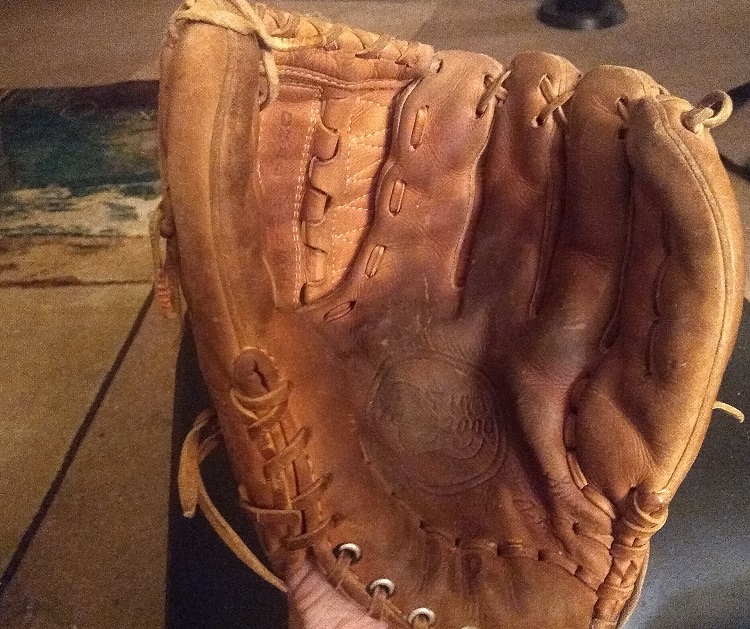
The Holy Grail of baseball gloves for a time was this, the Wilson A2000, with its big web, ergonomic shape and “Grip-Tite Pocket.” I got this at a thrift store.

By John Murphy

It happens repeatedly. I can’t help it. Whenever I see an old baseball glove at a swap meet or a thrift store, I check it out.

I stick my left hand into the glove. I eyeball it. Then I pound my fist into the pocket to see how it feels. Maybe I even smell the leather.

My first glove was a hand-me-down from my older brother Jim. It was a great glove, but I lost it one day in San Bruno Park. I had joined a rowdy game of “king of the hill” with a bunch of other kids. When we got done pushing and shoving and frolicking about, I forgot the glove. Left it behind.

“I didn’t give you that mitt to lose it,” my brother said sternly. The words stung. I don’t think I ever felt so bad.

I muddled through Midget League with a Nokona Don Mossi model. It was a piece of crap, but I made do.

A few years later I got another hand-me-down glove from my brother — a perfectly molded Rawlings Brooks Robinson Fastback model. It had an Edge-U-Cated Heel, Flex-O-Matic Palm, Basket Web and “Deep-Well” Pocket. Nobody knew what all that crap meant — it was just stuff Rawlings stamped on the leather. Anyway, it was a damned good mitt.  

Preparing our gloves was a yearly ritual. I’d watch my brother intently as he sat on his twin bed and took out a small container of Rawlings Glovolium. He squeezed a few drops into his hand and then kneaded it into the pocket of the glove. He hit a few other key points on the glove as well. Then he took a tennis ball and placed it in the pocket, then wrapped a rubber band around it all. Finally, he tucked the treasured package of leather under his mattress for a few months. And I did the same with mine.

A player and his glove are hard to separate. It’s said former Houston Astros third baseman Doug Rader used his Marty Marion-autograph glove from Little League until he was 23 years old. Then it fell apart.

It’s been a long time since my last hardball game. But come baseball season, I like to get the old gloves out and smell the leather and pound my fist into the pocket once again. It takes me back to a time when life was simpler and victory was just three outs away.

The marathon

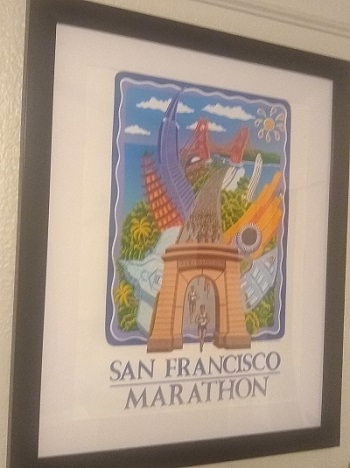
I didn’t officially enter SF Marathon in 1979 and had no mementos, so I bought this poster. Some of landmarks on poster were not part of original course.

By John Murphy

I have been thinking about running lately. No, not actually doing it – just the physical act of running.  

Seems like another lifetime, but on July 8, 1979 I ran the San Francisco Marathon in three hours, 50 minutes. I know this, because there were free programs at the event, and I grabbed one and wrote my finish time on the cover.

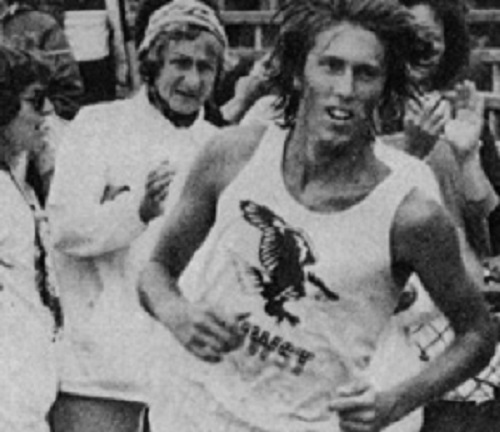
It’s funny because examining the cover of the 1979 SF Marathon program, there’s a picture of the 1978 winner, Steve Palladino. He’s shown, shaggy hair flying, cruising into the finish in 2:21 in the second SF Marathon ever held. I think he received a trophy.   

Palladino (see photo below) was in my home room at Serra High School. The winner of the first SF Marathon in 1977 was one Athol Barton, a taxicab driver from Reno. He received a T-shirt!

I got nothing for my 26.2 miles of agony. Zippo. I wasn’t even officially entered. This was typical of me and my running friends like Keith Larsen and Steve O’Brien at the time. We didn’t have a lot of money and so we automatically blew off the modest entry fees for all races such as the Bay to Breakers and the Zoo Run.

We caught the bug as part of the running boom of the 1970s. The boom started after the United States’ Frank Shorter won the Olympic marathon. The late Steve Prefontaine was a rock star runner at the same time and the movement just caught on, much like tennis during the same era.  

I probably should have left well enough alone after 1980, but in 1981 I went back. I tried to run the SF Marathon again and hadn’t trained enough. I dropped out after 20 miles and started walking. Then I cramped up and couldn’t even walk and sat down.

Before long a big truck full of non-finishers – I call it the “loser truck” – comes around and picks you up. Everyone’s quiet and somber and disappointed in themselves after they’ve run 19 or 20 miles. It’s more than a little ironic.  

Well, I couldn’t finish on such a sour note. I got more serious about training and finished the race in 1981. It was rush and a feeling of redemption to run triumphantly across the finish line. My time was the same as in 1980 – safely under four hours. Not bad, but not nearly in Steve Palladino’s class.

Four decades later, I am as proud of running the marathon as anything I’ve done. I even have a framed copy of that 1979 program up on my wall.

So comeback in 2021? Nah, not even. That’s a ship that sailed a long time ago.

Steve Palladino, my old classmate from Serra High School, won the 1978 San Francisco Marathon in 2 hours, 21 minutes.